The Laboratory Relocation Process: A Step-by-Step Guide for a Safe, Compliant Move
The Laboratory Relocation Process: Moving a laboratory is nothing like moving a standard office. Sensitive instruments, hazardous materials, calibration requirements, and strict regulatory compliance turn what might be a simple relocation elsewhere into a highly technical operation. Get any step of the laboratory relocation process wrong, and you risk damaged equipment, compliance violations, or weeks of downtime while instruments are recalibrated or replaced.
At Rapid Office Movers, we understand that a lab move requires far more planning than a typical office relocation. Below is a full breakdown of the laboratory relocation process — and how the right moving partner keeps every step safe, compliant, and on schedule.
Why Laboratory Relocation Is Different From a Standard Office Move
Labs involve unique risks that general movers simply aren’t trained to handle:
- Sensitive & Delicate Equipment – Microscopes, centrifuges, spectrometers, and analyzers are often extremely delicate and require careful handling and, in many cases, recalibration after transport.
- Hazardous Materials – Chemicals, biological samples, and controlled substances may require special permits, packaging, and transport protocols.
- Regulatory Compliance – Depending on your industry (pharmaceutical, biotech, academic, clinical), you may need to follow OSHA, EPA, or facility-specific compliance standards during the move.
- Environmental Controls – Some equipment and samples need temperature-controlled transport to avoid damage or spoilage.
- Downtime Sensitivity – Research timelines and clinical operations often can’t afford extended interruptions, making planning and speed equally important.
The Laboratory Relocation Process, Step by Step
1. Pre-Move Planning & Inventory Assessment
Every successful lab move starts with a full inventory of equipment, chemicals, samples, and furniture. This includes documenting:
- Equipment type, size, and fragility level
- Instruments requiring specialized crating or climate control
- Hazardous materials that need permits or special handling
- Any equipment requiring professional disconnection or decommissioning before the move
2. Coordination With Vendors & Compliance Requirements
Many lab moves require coordination with equipment manufacturers or specialized technicians for disconnecting, recalibrating, or re-certifying instruments after the move. This step also includes confirming any required permits for transporting chemicals or biological materials.
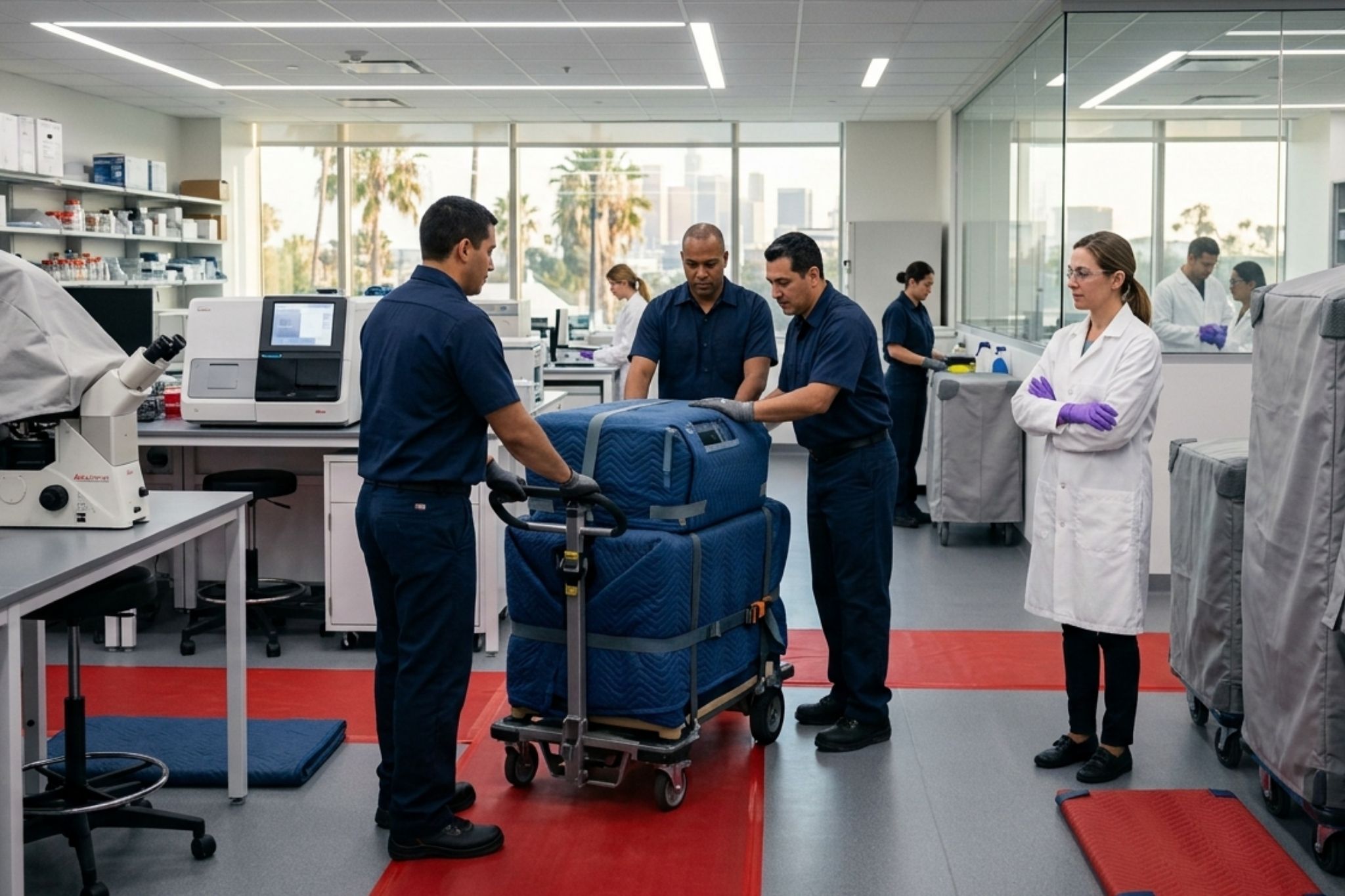
3. Packing & Equipment Protection
Lab equipment needs far more than bubble wrap. This stage involves:
- Custom crating for delicate or high-value instruments
- Anti-static packaging for sensitive electronics
- Secure, compliant containers for chemicals and samples
- Clear labeling for proper handling instructions during transport
4. Decommissioning & Disconnection
Larger lab equipment, such as fume hoods, autoclaves, or specialized benches, often needs to be professionally decommissioned before the move — including disconnecting gas lines, ventilation systems, and electrical connections safely.
5. Transport
Transport should account for equipment sensitivity, including climate-controlled vehicles when necessary, secure loading to prevent shifting, and careful route planning to minimize vibration and handling time.
6. Setup & Reinstallation at the New Facility
Once at the new location, equipment is unpacked, positioned according to the new lab layout, and reconnected. Sensitive instruments may need professional recalibration before they’re ready for use.
7. Testing & Verification
Before resuming operations, equipment should be tested to confirm everything is functioning properly. This step is critical for research continuity and regulatory compliance.
How Rapid Office Movers Supports Laboratory Relocations
- Specialized Equipment Handling – Trained crews experienced in moving delicate and high-value lab instruments.
- Careful Planning Around Compliance – We work with your team to ensure hazardous materials and sensitive equipment are handled according to required protocols.
- Custom Crating & Packing Materials – Purpose-built protection for equipment that can’t be moved like standard office furniture.
- Coordinated Scheduling – Moves planned to minimize downtime for ongoing research or operations.
- Licensed & Insured – Full protection for your equipment throughout the relocation process.
Frequently Asked Questions
What makes a laboratory relocation different from an office move? Lab moves involve sensitive, often delicate equipment, potential hazardous materials, and regulatory compliance requirements that standard office moves don’t require. This makes specialized planning and handling essential.
Do I need to hire a specialist for lab equipment recalibration after a move? In many cases, yes. Sensitive instruments like microscopes, analyzers, and centrifuges often require professional recalibration after transport to ensure accurate results.
How long does a laboratory relocation typically take? Timelines vary based on lab size and equipment complexity, but most lab moves require several weeks of planning before the physical move itself, which can often be completed within a few days.
Can Rapid Office Movers handle hazardous materials during a lab move? We coordinate closely with your team to ensure hazardous materials are handled according to required protocols and, where specialized permits or certified handlers are needed, help connect you with the right resources.
How far in advance should we start planning a lab relocation? We recommend starting the planning process at least 6–8 weeks before the target move date, especially for labs with complex equipment or compliance requirements.
Plan Your Laboratory Relocation With Rapid Office Movers
A well-executed laboratory relocation process protects your equipment, your research, and your timeline. If you’re planning a lab move, Rapid Office Movers is ready to help you plan every step carefully, from inventory to final setup. Contact us today for a free consultation and quote.