
Office Moving Costs in Los Angeles: The Real Breakdown Nobody Talks About
Office Moving Costs in Los Angeles: Most articles about office moving costs give you a range — “$5,000 to $15,000 for a mid-size office” — and call it a day. That’s useful for a ballpark, but it’s not the number that actually shows up on your final invoice. The real cost of an LA office move is made up of a dozen smaller line items, some obvious, some easy to forget entirely until they show up as a surprise. This is the breakdown of those pieces, one at a time.
Office Moving Costs in Los Angeles
Base labor and truck costs. This is the number most quotes lead with — crew size, hours, and vehicles. It’s usually billed hourly for local moves, and it’s the most visible, most compared part of any quote. It’s also, often, the smallest surprise on the final bill.
Packing materials. Boxes, wrap, tape, and padding add up fast at commercial scale, and not every quote includes them by default. If you’re packing yourself to save money, confirm whether materials are included or billed separately, and whether the moving company is even supplying them.
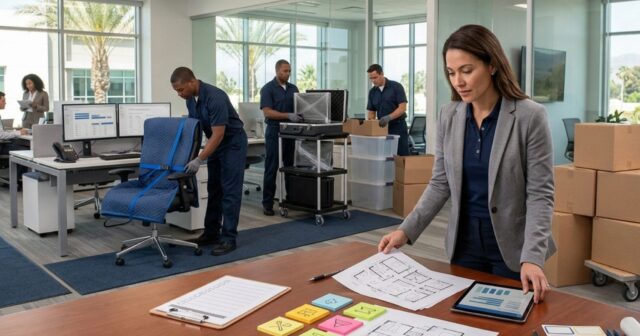
Furniture disassembly and reassembly. Cubicles, modular desks, and conference tables often need to come apart to move safely and go back together at the new space. Some movers include this as standard; others treat it as an add-on. It’s worth asking directly rather than assuming.
IT and electronics handling. This is one of the biggest gaps between what people expect and what’s actually included. Physically transporting a server is one line item. Disconnecting it properly, reconnecting it, and testing that it works at the new location is often a separate one — sometimes handled by a different vendor entirely.
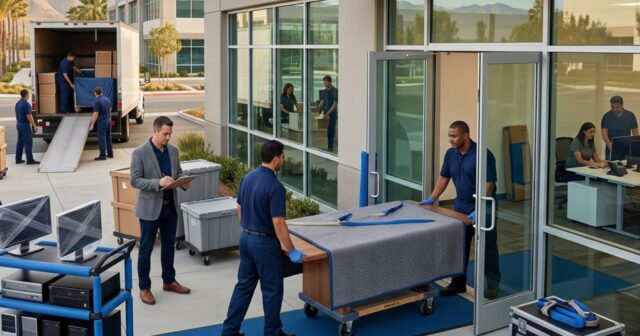
Building access requirements. In Los Angeles specifically, this catches a lot of businesses off guard. Certificate of Insurance documentation, elevator reservation fees in high-rises, loading dock scheduling, and parking permits for moving trucks can all add cost or time, particularly Downtown and in other dense commercial areas.
After-hours and weekend premiums. Moving outside business hours typically costs more per hour, often in the range of 20–30% above standard daytime rates. It’s usually worth it to avoid lost productivity, but it should be a known number going in, not a surprise on the invoice.
Insurance and valuation coverage. Basic coverage is often included, but it may not fully cover the replacement value of expensive equipment or furniture. Additional valuation coverage is worth understanding, and pricing, before moving day, not after something gets damaged.
Storage, if your timeline doesn’t line up. If your new space isn’t ready when you have to leave the old one, short-term storage becomes its own cost, and one that’s easy to forget when planning a “same-day” move that ends up needing a buffer.
Disposal and cleanout. Old furniture you’re not taking with you doesn’t dispose of itself. Some movers include basic haul-away as part of the service; others don’t, which means budgeting separately for a disposal or donation pickup.
Fuel and mileage, especially for larger relocations. Local moves usually fold this into the hourly rate, but longer relocations, or moves involving multiple trips, can add a mileage or fuel line that’s easy to overlook when comparing quotes.
Why This List Matters More Than the Total Number
Here’s the real issue with most moving estimates: two quotes for the same office can look completely different in price simply because they include different combinations of the items above. A quote that looks 30% cheaper might just be missing IT handling, furniture assembly, or building access fees, not actually offering a better deal.
The only way to compare quotes accurately is to compare what’s included, item by item, not just the bottom-line total.
Questions Worth Asking Before You Sign Anything
Before comparing final numbers, it’s worth getting specific answers to a few things: Does this quote include packing materials, or are those extra? Is furniture disassembly and reassembly included? What’s covered under IT handling, and does it include reconnection and testing? Are building access fees, like elevator reservations or COI documentation, factored in? What’s the after-hours premium, if we need one? Is there a disposal option for furniture we’re not keeping?
A detailed quote should have clear answers to all of these. A vague one usually means some of these costs are coming later.
How We Handle This
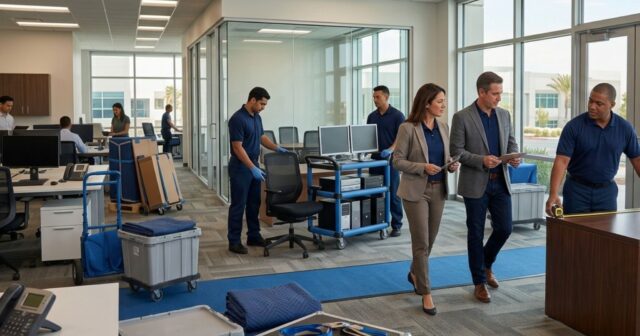
We build our quotes around exactly this list — itemized, so you can see what’s included before moving day, not after. If something isn’t part of the base quote, like additional valuation coverage or storage, we say so upfront rather than letting it show up as a surprise later.
Frequently Asked Questions
Why do two moving quotes for the same office look so different in price? Usually because they include different services. A lower quote may exclude things like furniture assembly, IT handling, or building access fees that a higher quote includes, making a direct comparison misleading without checking the details.
Are building access fees common for Los Angeles office moves? Yes, especially for moves involving high-rises or dense commercial areas. Certificate of Insurance requirements, elevator reservations, and loading dock scheduling can all add cost or time that isn’t always reflected in a base quote.
Does a moving quote usually include disposal of old furniture? Not always. Some movers include basic haul-away service, while others treat it as a separate cost. It’s worth confirming directly if you have furniture you won’t be taking to the new space.
What’s the most commonly forgotten cost in an office move budget? IT relocation beyond simple transport, specifically reconnection and testing at the new location, is one of the most frequently underestimated costs in a commercial move.
How can I make sure I’m comparing moving quotes fairly? Ask each company for an itemized breakdown covering the same categories: packing, furniture assembly, IT handling, building access fees, and after-hours premiums. Comparing line by line is more accurate than comparing bottom-line totals alone.
Want a Quote That Actually Breaks This Down?
If you’d rather see an itemized number than guess what’s included, we’re happy to walk through your space and build a clear, line-by-line quote. Reach out to Rapid Office Movers for a free consultation.