Moving Lab or Medical Equipment in LA? Here’s What Insurance Won’t Cover
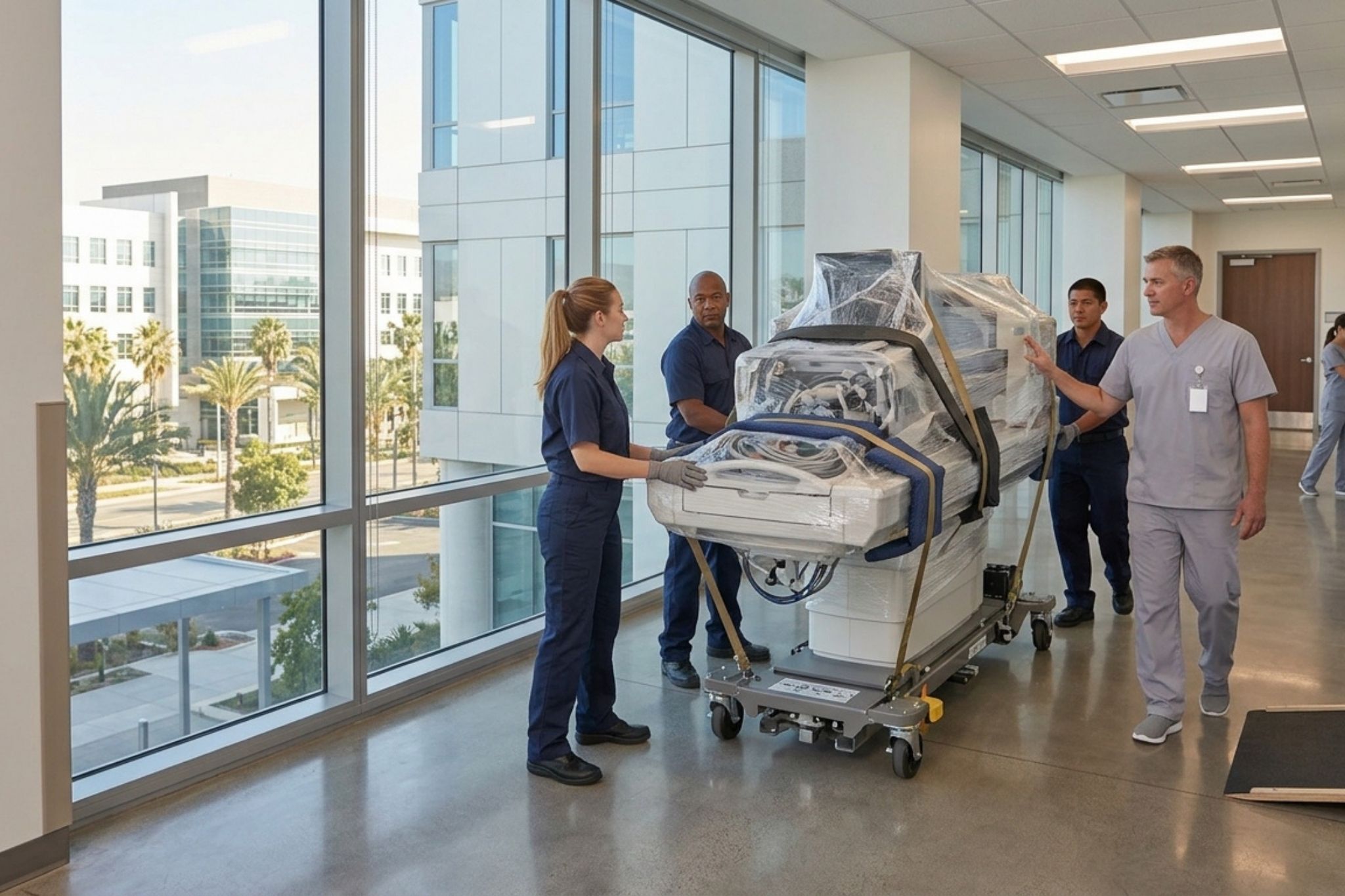
Moving Lab or Medical Equipment in LA? A standard moving company’s insurance is built around furniture and boxes. A dented filing cabinet or a scratched desk fits neatly into how that coverage works. A $40,000 mass spectrometer, a diagnostic imaging unit, or a walk-in freezer full of samples does not, and businesses relocating lab or medical equipment in LA often don’t find out about that gap until something goes wrong and the claim comes back far smaller than expected.
Moving Lab or Medical Equipment in LA?
This isn’t meant to replace a conversation with your insurance broker or risk manager, and you should absolutely have that conversation before your move. But here’s a plain-language look at where the gaps commonly show up, so you know what questions to ask.
Why Standard Moving Coverage Falls Short
Most movers carry what’s called released value protection or basic liability coverage, which is often calculated by weight rather than actual value. That works fine for furniture, where a heavier item is usually also a more expensive one. It breaks down completely for lab and medical equipment, where a small, lightweight component can be worth more than an entire truckload of office furniture. A coverage model built around pounds simply wasn’t designed for a device where the value is in precision electronics, not physical mass.
Specific Gaps to Watch For
Replacement value versus depreciated value. Basic coverage sometimes reimburses based on the depreciated value of equipment, not what it would actually cost to replace it today. For specialized lab or medical equipment, that gap can be significant.
Calibration and recertification costs. Even if a piece of equipment arrives physically undamaged, it may need professional recalibration or recertification before it’s usable again. Standard moving coverage often doesn’t account for this cost at all, since it’s not “damage” in the traditional sense.
Data and sample loss. If equipment stores data, or if the move involves samples that are lost or compromised due to improper handling, that loss is frequently outside the scope of a standard moving policy entirely, and may fall under a completely different type of coverage, if it’s covered anywhere.
Business interruption. If a piece of critical equipment is delayed or damaged and it stops your lab or practice from operating, the resulting revenue loss is generally not something a mover’s basic liability policy addresses.
Third-party or specialized equipment. Devices under a separate service or leasing agreement sometimes have their own insurance requirements or restrictions on how they can be moved, which can conflict with what a general mover’s policy assumes.
Regulatory or compliance-related costs. If equipment needs to be re-inspected or re-certified to meet industry-specific regulations after a move, those costs typically aren’t part of standard moving coverage either.
Questions Worth Asking Before You Move
Ask your mover directly what their liability coverage is based on, weight or actual value, and get that answer in writing. Ask whether their policy covers recalibration or recertification costs, not just physical damage. Talk to your own insurance broker about whether your existing equipment coverage extends to transit, or whether you need supplemental coverage specifically for the move. And ask your mover whether they’re familiar with handling insured, high-value, or leased equipment, since not every commercial mover has experience navigating those requirements.
What to Do If You Find a Gap
If you discover your mover’s standard coverage doesn’t adequately protect your equipment, you generally have a few options: purchase additional valuation coverage through the moving company if it’s offered, confirm with your own insurance provider whether your existing policy can be extended to cover the move, or work with a specialty insurance broker for high-value equipment transit coverage. None of these are things to sort out the week of your move. This is a conversation worth having as soon as you know a relocation is on the calendar.
A Note on What We Can and Can’t Tell You
We’re a moving company, not an insurance provider or broker, and none of this is intended as insurance or legal advice specific to your situation. What we can do is tell you honestly where the common gaps tend to show up, based on the moves we’ve been part of, and encourage you to have a specific, detailed conversation with your insurance provider or broker before you move anything of significant value.
How We Handle Equipment-Heavy Moves
For moves involving lab or medical equipment, we talk through valuation and coverage questions upfront, before moving day, rather than assuming standard coverage is automatically sufficient. If a gap exists, we’d rather you know about it in advance and have the chance to address it than discover it after something’s already happened.
Frequently Asked Questions
Does a moving company’s standard insurance cover expensive lab or medical equipment? Often not fully. Standard coverage is frequently based on weight rather than actual value, which can leave a significant gap for high-value, lightweight equipment like specialized lab or diagnostic devices.
Does moving insurance typically cover recalibration costs after equipment is transported? Usually not. Recalibration or recertification is generally considered a separate cost from physical damage and often isn’t included in standard moving coverage.
Should I talk to my own insurance provider before a lab or medical equipment move? Yes. It’s worth confirming with your insurance broker or provider whether your existing equipment coverage extends to transit, or whether supplemental coverage is needed specifically for the move.
Is business interruption covered under a mover’s liability policy? Typically not. Revenue loss from equipment delays or damage generally falls outside the scope of a standard moving company’s basic liability coverage.
Does Rapid Office Movers provide insurance advice for equipment-heavy moves? We’re not an insurance provider, so we can’t give specific coverage advice, but we do talk through valuation and coverage questions with clients before the move and encourage a direct conversation with your insurance broker.
Planning a Move With Valuable Equipment?
If your relocation involves lab or medical equipment, we’re happy to talk through how we handle valuation and coverage questions upfront, so nothing is left to assumption.
Reach out to Rapid Office Movers for a consultation.