Moving a Campus in Los Angeles? Here’s the Logistics Nobody Talks About
Moving a Campus in Los Angeles? A “campus” move, whether it’s a university relocating departments across buildings or a corporate tech campus consolidating multiple offices into one property, is a different animal from a single-building relocation. Most guides to this topic stay at the surface level: pack things, move things, unpack things. What they skip is the layer underneath that actually determines whether a multi-building LA campus move goes smoothly or turns into a logistical mess. Here’s what that layer actually looks like.
Moving a Campus in Los Angeles?
A single-building office move has one address, one loading zone, one elevator system to coordinate. A campus move might involve five, ten, or twenty buildings, each with its own access rules, its own timeline, and its own stakeholders who all assume their building is the priority. Planning it like one large office move, just bigger, is exactly how campus relocations run into trouble.
The Logistics That Actually Matter
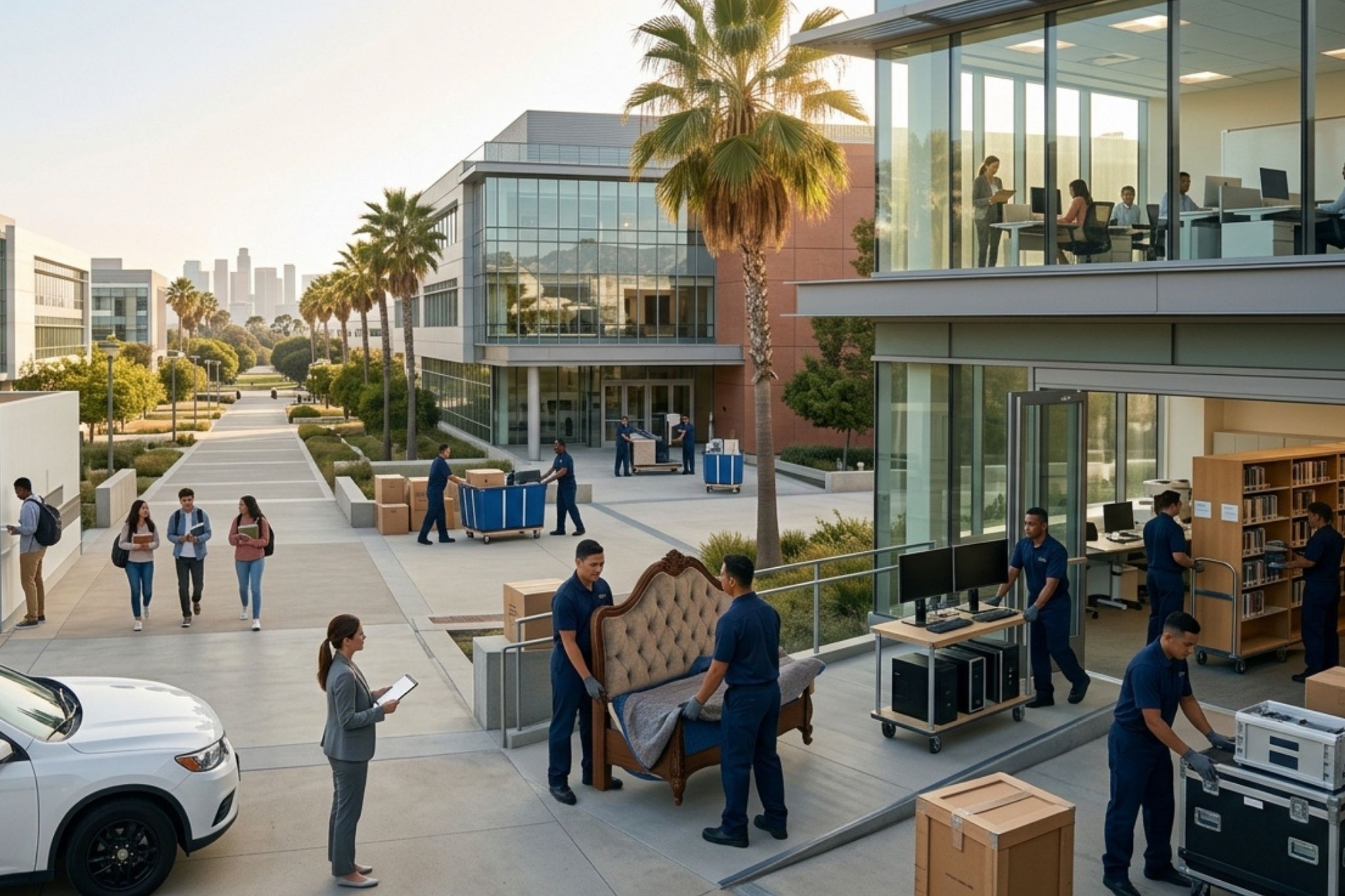
Internal traffic flow, not just external access. On a real campus, moving trucks and crews aren’t just getting into one building, they’re navigating internal roads, loading zones, and pedestrian traffic between buildings, often while the campus is still partially operational. In LA specifically, campus properties are frequently squeezed onto tighter urban footprints than suburban campuses elsewhere, which makes internal routing a real planning problem, not an afterthought.
Staggered building access and security protocols. Different buildings on the same campus often have different badge systems, different security requirements, and sometimes different property management or facilities teams entirely, especially on university campuses where individual departments may control their own space. A moving plan has to account for each building’s specific access process, not assume one campus-wide badge solves everything.
Multi-stakeholder sign-off. On a campus move, it’s rarely one decision-maker approving the plan. Facilities, IT, department heads, security, and sometimes campus administration all need to be looped in, and their priorities don’t always align. A crew showing up to a building without the right sign-offs in place can lose hours waiting on approvals that should have happened weeks earlier.
Utility and infrastructure coordination across buildings. Moving IT infrastructure on a campus often means coordinating network cutover schedules building by building, sometimes with different IT teams managing different parts of the network. A move that goes smoothly in Building A can stall completely in Building B if the network team there wasn’t looped into the same timeline.
Parking structure and loading zone competition. Campus parking structures and loading docks are often shared resources used by far more than just your moving crew, deliveries, maintenance, other tenants, campus traffic. Reserving these spaces in advance, and having a backup plan when they’re unavailable, matters more on a campus than almost any single-building move.
Event calendar conflicts. Universities have academic calendars, but corporate campuses have their own version: all-hands events, executive visits, or scheduled facility work that can conflict with a moving timeline nobody thought to check against. A campus move plan built without checking the property’s broader event calendar can collide with something completely unrelated to the move itself.
Sequencing across buildings. Campus moves rarely happen all at once. They’re usually staged, building by building or department by department, which means the moving plan has to function as an ongoing project with a real sequence, not a single moving day.
Why LA Specifically Adds Another Layer
Los Angeles campus properties, whether university or corporate, often deal with tighter urban footprints, more complex street access, and stricter city permitting for things like extended loading zone use or overnight work than a suburban campus would. A moving plan that works fine on a sprawling campus elsewhere can run into permit and access issues once it’s actually happening on LA’s more constrained urban terrain.
What a Realistic Campus Moving Plan Actually Includes
A site-by-site access audit, confirming security requirements, badge systems, and loading zone rules for every building involved, not just the first one. A stakeholder map identifying every group that needs to sign off, not just the person who requested the move. A sequencing plan, showing which buildings move in which order and why, tied to both operational needs and IT cutover timing. A parking and loading reservation plan, confirmed in advance rather than assumed available on moving day. And a cross-check against the property’s broader event calendar, so the move doesn’t collide with something unrelated.
How We Approach Campus-Scale Moves in LA
We start with the site-by-site audit before building a single day of the schedule, because assumptions about access tend to be where campus moves go wrong first. From there, we build a sequencing plan around your actual stakeholders and IT timelines, not a generic multi-building template, and we coordinate directly with facilities and security teams at each building rather than assuming one process applies campus-wide.
Frequently Asked Questions
What makes a campus move different from a large office relocation? A campus move typically involves multiple buildings with separate access rules, security protocols, and stakeholders, requiring coordination that a single-building office move doesn’t need, even if the total square footage is similar.
Why do campus moves in Los Angeles specifically require extra planning? LA campus properties often have tighter urban footprints, more complex street access, and stricter city permitting requirements than suburban campuses, which can affect scheduling and logistics in ways that aren’t obvious from a general moving plan.
Who needs to be involved in planning a campus move? Typically facilities, IT, security, and relevant department or business unit leaders all need to be looped in, since a campus move usually affects more stakeholders than a single-building relocation.
Do campus moves happen all at once or in phases? Most campus moves are staged, building by building or department by department, rather than happening on a single day, due to the coordination required across multiple locations.
Does Rapid Office Movers have experience with multi-building campus relocations in LA? Yes, we approach campus-scale moves with a site-by-site access audit and a sequencing plan built around each building’s specific requirements and stakeholders.
Planning a Multi-Building Campus Move?
If you’re coordinating a relocation across a university or corporate campus in LA, we’re happy to walk through the site-by-site logistics before anything gets scheduled.
Reach out to Rapid Office Movers for a consultation.