Hotel Renovation Moving: How to Relocate FF&E Without Closing Rooms
How to Relocate FF&E Without Closing Rooms? A hotel renovation isn’t like a typical commercial move — guests are checking in, sleeping, and dining just steps away from active construction. Every delayed delivery, mismanaged installation, or closed floor has a direct impact on occupancy, revenue, and guest satisfaction scores. At Rapid Office Movers, we help hospitality properties relocate and replace furniture, fixtures, and equipment (FF&E) in a way that keeps as many rooms sellable as possible throughout the project. Here’s how a well-run hotel renovation move actually works.
How to Relocate FF&E Without Closing Rooms
FF&E — furniture, fixtures, and equipment — covers everything from guest room beds, desks, and lighting to lobby décor, restaurant equipment, and public-space furnishings. A full FF&E relocation project typically includes:
- Scheduled, phased delivery to match construction milestones
- Room-by-room installation, placement, and setup
- Removal, disposal, or recycling of old FF&E (often called hotel liquidation)
- Secure warehousing for items not immediately needed or being reused later
- Detailed inventory tracking, so every item — down to the lamps — is accounted for
The goal isn’t just moving furniture. It’s sequencing that furniture so the property keeps functioning as a hotel throughout the process.
Why “Close the Whole Property” Is Rarely the Right Answer
Closing an entire hotel for a renovation might seem simpler on paper, but the revenue impact is severe — 100% occupancy loss for the full duration of the project. Most ownership groups instead choose a phased, rolling renovation strategy that closes only a fraction of the property at any given time.
A common approach looks like this:
- Close a defined block of rooms (often 8–10% of total inventory) for a one- to two-week window
- Complete demolition, construction, and FF&E installation for that block
- Reopen those rooms and move to the next block, repeating the cycle floor by floor or wing by wing
Using this kind of rotation, a mid-sized hotel can often complete a full FF&E replacement in a matter of weeks while keeping the large majority of its rooms sellable throughout — a dramatically better outcome than a full closure.
Step 1: Define the Renovation Objective Before You Move Anything
Before any FF&E moves, ownership and the general contractor need to agree on what’s actually driving the project — minimizing downtime, protecting brand standards during a flag conversion, or maintaining a specific occupancy floor throughout. That objective shapes every decision that follows, from how many rooms can be closed at once to how tightly delivery windows need to be scheduled.
Step 2: Bring in Your FF&E Logistics Partner Early
The biggest mistake hotel owners make is treating FF&E logistics as an afterthought once procurement is already underway. Bringing in a moving and logistics partner while design and procurement are still being finalized allows them to flag packaging needs, warehousing requirements, and delivery constraints before purchase orders are locked in — which prevents costly rework later.
Step 3: Build a Room-by-Room or Floor-by-Floor Sequencing Plan
A written logistics plan should spell out exactly how FF&E will be sequenced, tracked, and delivered against the construction schedule. Key elements include:
- Which rooms or floors close in which order, and for how long
- Delivery windows synchronized so all FF&E for a given room block arrives together — staggered vendor deliveries are one of the most common causes of delay
- A single point of contact from ownership who coordinates between the general contractor, procurement, and the moving team, so nothing falls through the cracks between parties
Step 4: Schedule Deliveries Around Guest-Facing Hours
In a partially operating hotel, FF&E deliveries typically happen overnight or in early-morning windows to avoid disrupting guests. A well-run delivery includes:
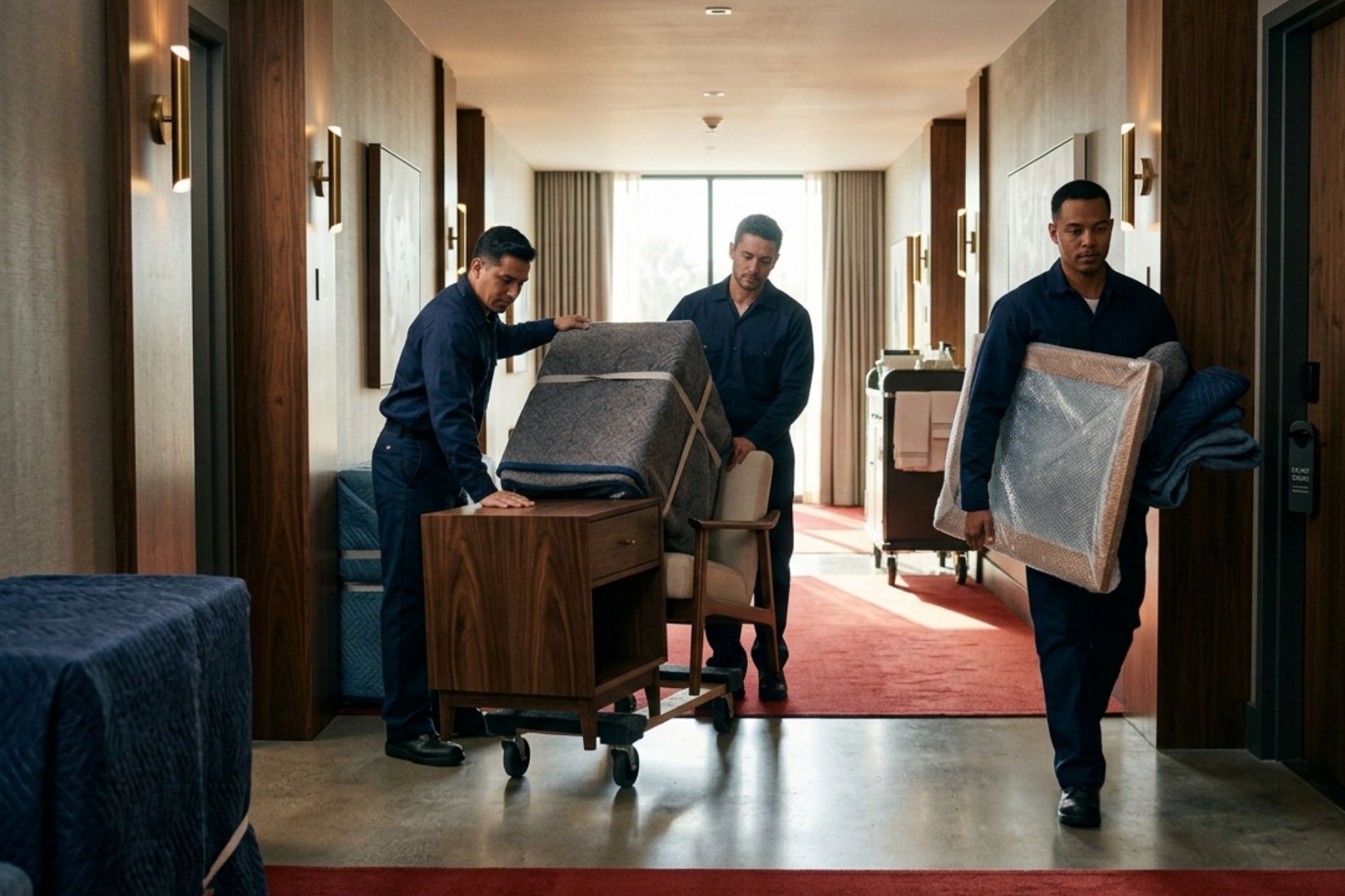
- Floor, corridor, and elevator protection installed before any large furniture moves through guest-facing areas
- Delivery directly to the specific room or a designated staging area, not a general drop-off point
- Same-day removal of cartons, crates, foam, and packing debris — critical for meeting fire code, since corridor storage of packing materials is something fire marshals actively watch for during hotel renovations
Step 5: Plan for Storage and Old FF&E Removal
Not every piece of furniture arrives exactly when it’s needed, and not every old piece leaves the property immediately.
- Secure, climate-appropriate warehousing lets new FF&E arrive ahead of schedule without cluttering the active renovation area
- Old FF&E removal (hotel liquidation) should be planned as its own workstream — items are disassembled and removed without damaging the property, then responsibly disposed of, recycled, or resold
- Inventory control matters at both ends — knowing what’s in storage, what’s been installed, and what’s still in transit prevents the single most common cause of installation delays: labor standing idle because the right furniture isn’t on-site yet
Common Pitfalls That Delay a Reopening
- Underestimating installation costs. FF&E budgets often account for the furniture itself but not the labor to receive, assemble, and place it — a gap that can add double-digit percentage overages to a project
- Uncoordinated vendor shipping timelines. When different vendors ship on different schedules, partial deliveries sit in storage while rooms stay closed waiting for the last piece to arrive
- Underestimating protection needs. Damage to floors, elevators, or corridors during transport can create rework that eats into the renovation timeline
- No single point of accountability. Without one person coordinating ownership, the general contractor, and the moving team, small scheduling conflicts turn into major delays
How Rapid Office Movers Supports Hotel Renovation Projects
Relocating FF&E in a live hotel means balancing construction timelines, guest experience, and brand standards — all at once. Rapid Office Movers works with hotel ownership groups and general contractors to build phased delivery and installation plans that keep rooms sellable throughout the renovation, handle old FF&E removal and storage, and keep every shipment tracked from warehouse to guest room.
Planning a hotel renovation or FF&E replacement project? Contact Rapid Office Movers today to build a phased relocation plan that protects your occupancy and your timeline.