How to Move Office Furniture Without Damage, Delays, or Downtime
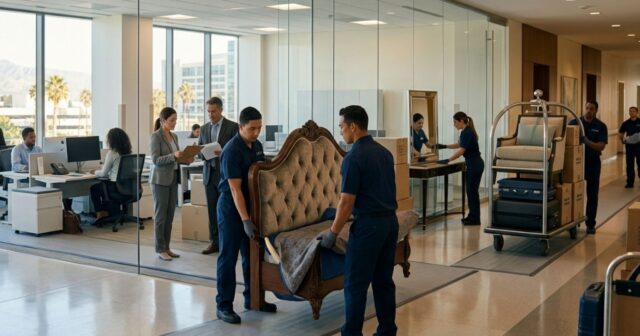
How to Move Office Furniture Safely? Office furniture takes more punishment during a move than almost anything else in the building. Desks get scratched, cubicle panels get bent, conference tables get chipped at the corners — and once it’s damaged, replacing it costs far more than the move itself would have. If you need to move office furniture as part of a relocation, the way you plan and execute that step has a direct impact on your budget, your timeline, and how quickly your new space is actually usable.
How to Move Office Furniture Safely
At Rapid Office Movers, furniture handling is one of the most common — and most underestimated — parts of a commercial move. Here’s what actually goes into doing it right.
Why Office Furniture Is Harder to Move Than It Looks
Unlike household furniture, office furniture often comes with added complexity:
- Modular & Systems Furniture – Cubicles and modular workstations are often interconnected and require proper disassembly, not just lifting and carrying.
- Heavy, Awkward Pieces – Conference tables, executive desks, and filing cabinets are often bulky and difficult to maneuver through hallways, doorways, and elevators.
- Mixed Materials – Glass tabletops, laminate finishes, upholstered seating, and metal frames each require different handling and protective materials.
- Volume – A single office move might involve dozens or hundreds of individual furniture pieces, all needing to be tracked, protected, and placed correctly at the new location.
Step-by-Step: How to Move Office Furniture the Right Way
1. Inventory and Assess
Before anything gets touched, take stock of what’s moving, what’s being replaced, and what condition each piece is in. This helps identify items that need special handling, such as glass surfaces or antique or high-value pieces.
2. Disassemble What Can Be Disassembled
Cubicles, modular desks, and large conference tables typically move more safely and efficiently in pieces. Disassembly also reduces the risk of damage to doorframes, elevators, and walls during transport.
3. Protect Every Surface
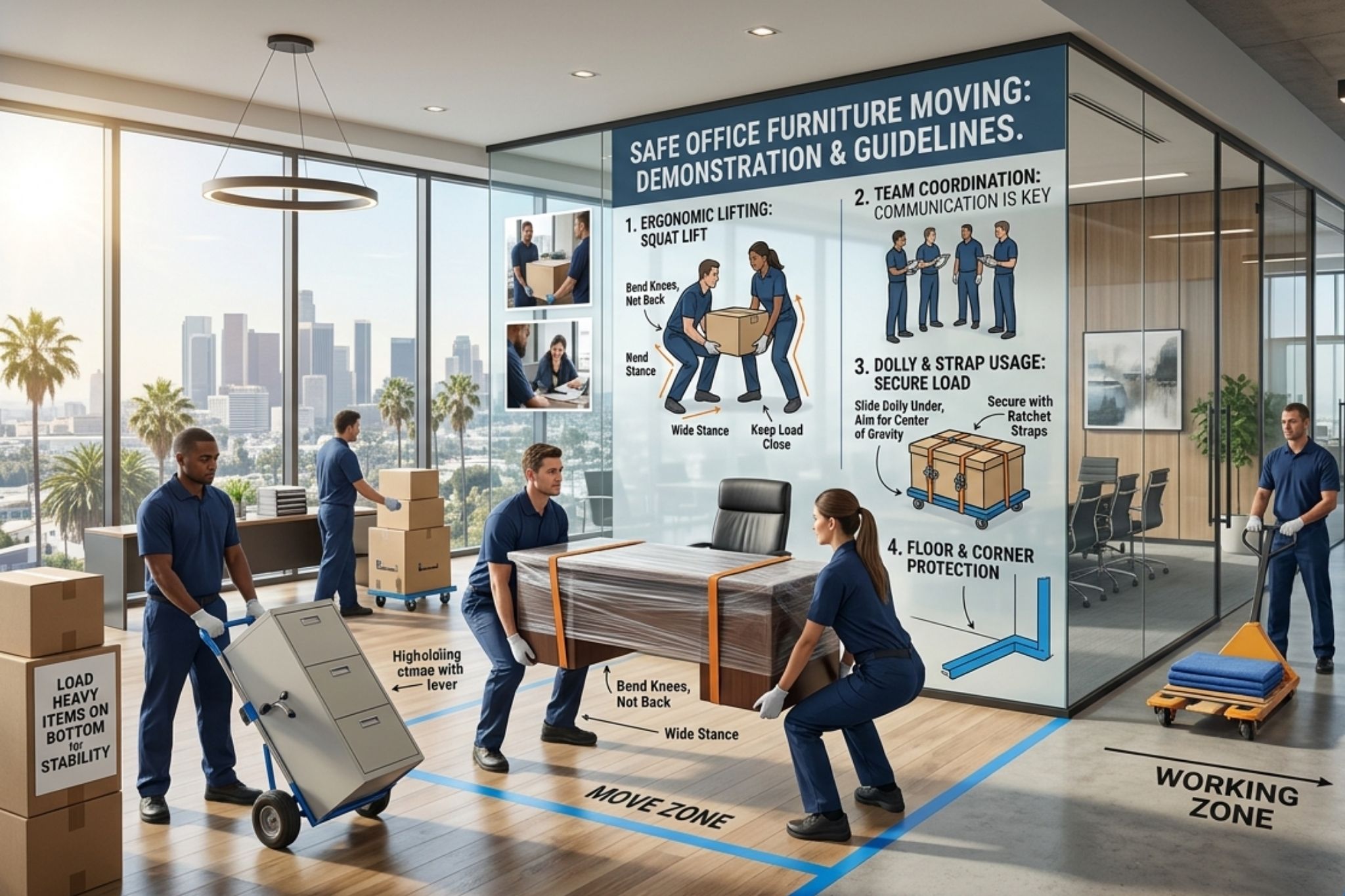
Furniture pads, moving blankets, corner protectors, and stretch wrap should be used on every major piece — especially anything with a finished wood, laminate, or glass surface.
4. Label for Reassembly
Labeling hardware, cables, and disassembled parts (and matching them to their furniture piece) saves significant time during setup at the new location. A clear system prevents lost screws and mismatched panels.
5. Use the Right Equipment
Furniture dollies, hand trucks, and moving straps aren’t optional extras — they’re what prevent injuries and damage when moving heavy or awkward pieces through hallways, stairwells, or elevators.
6. Plan the Route Before Moving Day
Walk the path furniture will take at both the old and new location. Measure doorways, elevators, and hallways in advance to avoid discovering a piece won’t fit through a doorway on moving day.
7. Reassemble and Place Strategically
At the new location, furniture should be reassembled and positioned according to the new floor plan — not just placed wherever there’s open space, which often leads to a second round of moving later.
Common Mistakes That Lead to Damaged Furniture
- Skipping protective wrapping to save time – This is one of the most common causes of scratched or dented furniture.
- Not measuring doorways and elevators in advance – Leads to furniture getting stuck or damaged trying to force it through tight spaces.
- Using untrained labor for heavy or modular furniture – Improper lifting or disassembly technique increases the risk of both injury and damage.
- Failing to label disassembled parts – Results in lost hardware and delays during reassembly.
- Overloading dollies or stacking furniture unsafely – Increases the risk of tipping, dropping, or crushing damage during transport.
How Rapid Office Movers Handles Office Furniture
- Trained Crews – Experienced in disassembling, protecting, and reassembling all types of office furniture, from standard desks to complex modular systems.
- Commercial-Grade Protective Materials – Furniture pads, wrap, and corner protectors used on every piece that needs it.
- Organized Labeling Systems – Every disassembled piece and its hardware is labeled and tracked for accurate reassembly.
- Full Setup Service – We don’t just deliver furniture — we position and reassemble it according to your new office layout.
- Licensed & Insured – Your furniture is protected throughout the entire process.
Frequently Asked Questions
Can office furniture be moved without being disassembled? Smaller pieces sometimes can, but larger items like cubicles, modular workstations, and large conference tables are almost always safer and easier to move when disassembled first.
How do I prevent scratches and damage during an office furniture move? Using proper protective materials — furniture pads, moving blankets, corner protectors, and stretch wrap — on every major piece is the most effective way to prevent damage during transport.
Do professional movers reassemble furniture at the new location? Yes, full-service office movers like Rapid Office Movers typically include disassembly, transport, and reassembly as part of the move, along with placing furniture according to your new floor plan.
What’s the biggest cause of damaged office furniture during a move? Skipping protective wrapping and failing to measure doorways, hallways, and elevators in advance are two of the most common causes of furniture damage during commercial moves.
Should I hire movers just for furniture, or can I do it myself? For small amounts of lightweight furniture, a DIY move may work, but for larger offices with modular furniture, heavy pieces, or tight timelines, professional movers reduce the risk of damage, injury, and wasted time.
Get Help Moving Your Office Furniture the Right Way
Whether you’re relocating a small office or an entire floor, Rapid Office Movers has the experience and equipment to move office furniture safely, efficiently, and without unnecessary damage or downtime. Contact us today for a free quote.