Hotel Moving Services LA: How Renovations Happen Without Closing Rooms
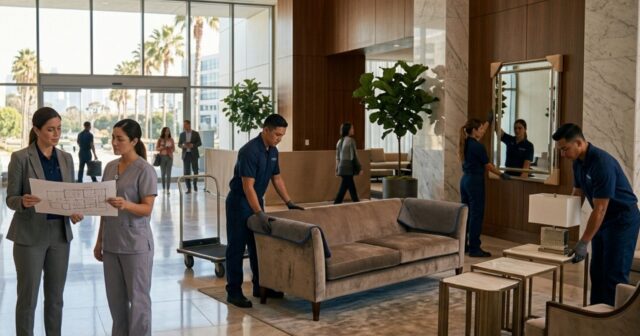
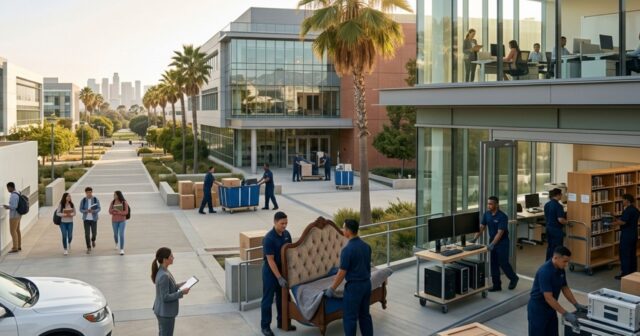
Hotel Moving Services LA: A hotel renovation creates a problem most other commercial relocations don’t have to deal with: the building can’t close. Guests are still checking in, rooms are still being booked months out, and revenue doesn’t pause just because the furniture in half the property needs to be replaced. That’s exactly why hotel renovations almost never happen all at once — they happen floor by floor, wing by wing, in a sequence that depends heavily on moving and storing furniture, fixtures, and equipment (FF&E) in a way that keeps the rest of the property fully operational.
Here’s how that actually works in practice.
Hotel Moving Services LA
Closing an entire property for a renovation means losing every dollar of revenue that property would have generated during that period, plus the cost of relocating staff and, in some cases, existing guests. For most hotels, that’s not financially realistic. A phased renovation, floor by floor or wing by wing, allows the property to keep generating revenue from unrenovated rooms while work happens elsewhere, which is why it’s the standard approach for nearly every mid-size and large hotel renovation.
The tradeoff is logistical complexity. Phased renovations require careful sequencing, and that sequencing depends heavily on how efficiently old FF&E can be removed and new FF&E can be brought in, floor by floor, without disrupting operations happening just one floor away.
What FF&E Moving Actually Involves
Removing existing furniture and fixtures from rooms being renovated. This typically happens in tight windows, often overnight or during low-occupancy periods, to avoid disrupting nearby guest rooms with noise or hallway traffic during active stays.
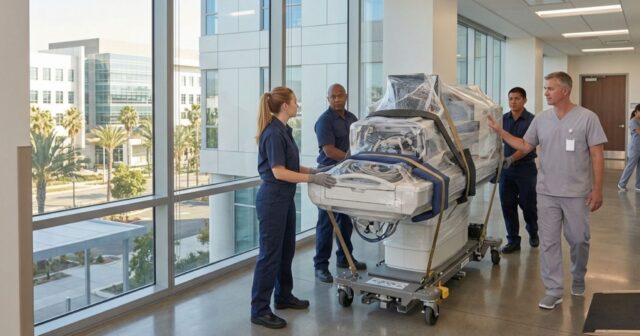
Staging and storing removed items. Depending on the renovation plan, some furniture is being replaced entirely and needs disposal or liquidation, while other pieces may be temporarily stored for reuse elsewhere in the property or at a sister location.
Receiving and staging new FF&E. New furniture, fixtures, and equipment often arrive in stages, sometimes well before a specific floor’s renovation begins, requiring secure, organized storage until installation.
Installing new FF&E as each phase completes. Coordinating the timing so new furniture moves in immediately behind renovation crews keeps rooms coming back online as quickly as possible, minimizing the number of unsellable rooms at any given time.
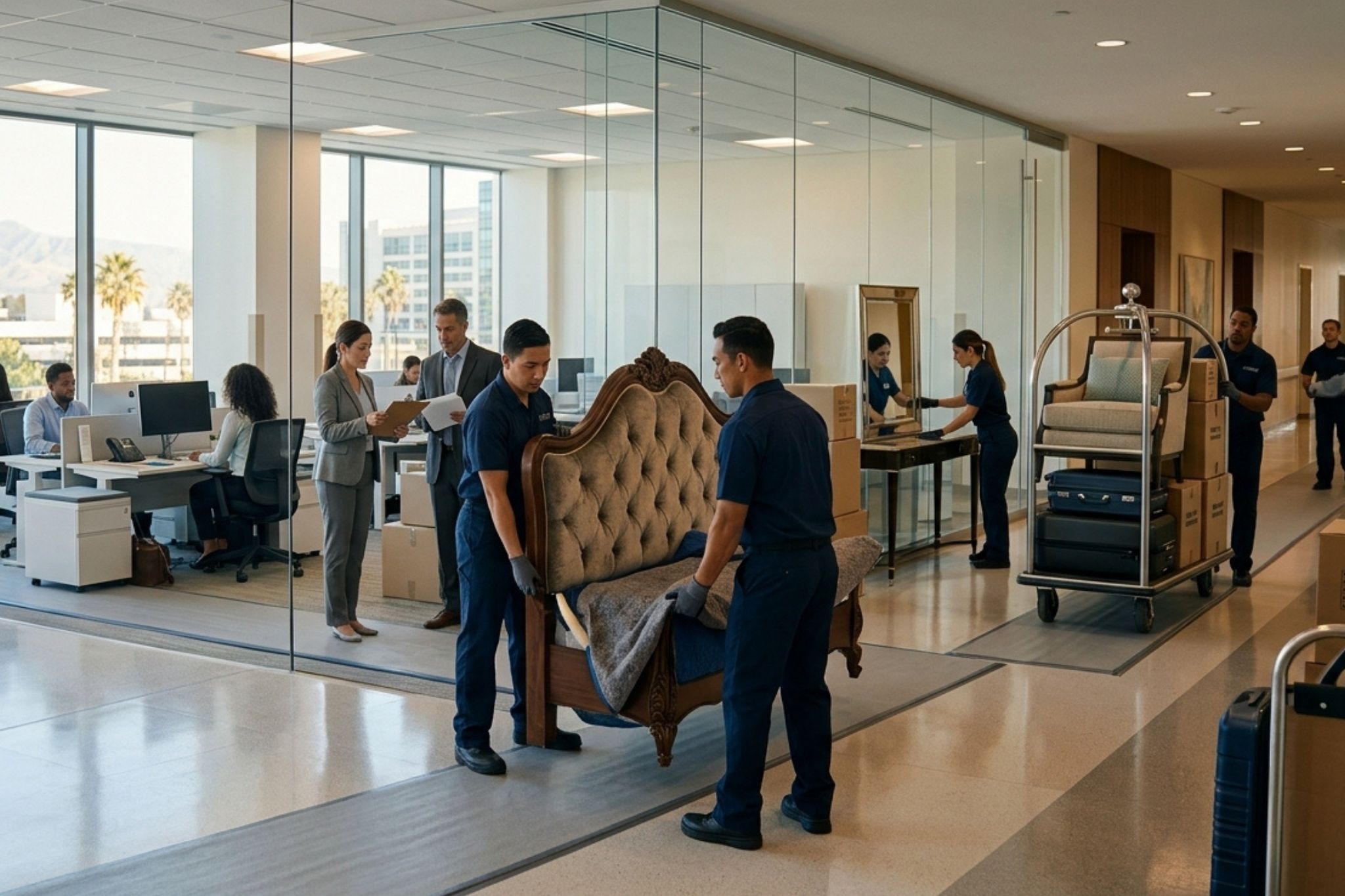
Coordinating around hotel operations, not the other way around. Elevator usage, loading dock access, and hallway traffic all need to work around guest check-in and check-out times, housekeeping schedules, and existing bookings, not disrupt them.
Why This Requires a Different Approach Than a Standard Office Move
A typical office relocation happens once, on one day, for one client. A hotel renovation involves recurring, phased moves over weeks or months, coordinated tightly with a construction and design timeline that’s often changing in real time. It also requires working discreetly around active guests, something that simply doesn’t come up in a standard commercial relocation. A mover unfamiliar with hospitality environments can create exactly the kind of disruption a phased renovation is designed to avoid, noisy hallway moves during quiet hours, blocked guest elevators during checkout rush, or a loading dock tied up when a delivery truck needs it.
What Makes a Renovation-Phase Move Go Smoothly
A detailed sequencing plan tied to the construction timeline, not a rough estimate of when floors might be ready.
Overnight or low-occupancy scheduling for the most disruptive parts of the move, minimizing guest-facing impact.
Secure, organized storage for both outgoing and incoming FF&E, especially when new furniture arrives well ahead of its installation date.
Clear communication with hotel operations and construction teams, since renovation timelines shift, and a moving plan needs to be able to shift with them.
Discretion around active guest areas, treating hallways, elevators, and lobbies as spaces that still need to feel normal to the people staying there.
How We Approach Hotel Renovation Moves in LA
We build our scheduling around your renovation and operations timeline, not a fixed moving-day assumption, coordinating closely with construction teams as phases shift. FF&E storage is handled securely and organized by floor or phase, so incoming furniture is ready exactly when a room is ready for it. And the physical work itself is scheduled to minimize guest disruption, quiet, efficient, and out of the way during active hours.
Frequently Asked Questions
Why do hotels renovate in phases instead of closing entirely? Closing an entire property means losing all revenue during the renovation period. Phased renovations allow unrenovated rooms to stay operational and generate revenue while other floors or wings are being worked on.
What is FF&E, and why does it matter for hotel renovations? FF&E stands for furniture, fixtures, and equipment. Efficiently moving and storing FF&E is central to phased renovations, since new rooms can’t reopen until new furniture and fixtures are installed.
How do movers avoid disrupting hotel guests during a renovation? Scheduling the most disruptive work overnight or during low-occupancy periods, along with careful coordination around elevators, hallways, and loading docks, helps minimize guest-facing disruption.
Does Rapid Office Movers handle hotel FF&E moving and storage in Los Angeles? Yes, we work with hotels managing phased renovations, coordinating FF&E removal, storage, and installation around active operations and construction timelines.
How far in advance should a hotel plan FF&E logistics for a renovation? This should be planned alongside the construction timeline from the start, since FF&E delivery, storage, and installation need to be sequenced closely with each renovation phase.
Planning a Phased Hotel Renovation?
If your property is renovating floor by floor and needs FF&E moving and storage that works around active operations, we’re happy to talk through how we’d approach your specific timeline. Reach out to Rapid Office Movers for a consultation.