Biological Material Lab Moving: What Actually Matters Beyond “Handle With Care”
Biological Material Lab Moving: Moving a centrifuge or a microscope is delicate work, but moving biological material is a different category of risk entirely. Cell lines, tissue samples, blood products, cultures, and specimens aren’t just fragile — many are irreplaceable, temperature-sensitive, and subject to real regulatory requirements. If years of research are sitting in a freezer that needs to move across town, “be careful” isn’t a plan. You need a process.
Biological Material Lab Moving
We’ve supported labs through this exact situation, and this post covers what actually matters when biological material is part of a relocation — not just the general moving checklist, but the specific risks that come with samples that can’t simply be reordered if something goes wrong.
Why Biological Material Changes Everything About a Move
Most lab equipment, if damaged, can eventually be repaired or replaced. Biological material often can’t be. A degraded cell line, a compromised sample, or a break in cold chain can mean the loss of months or years of research — which is exactly why this category of move deserves its own level of planning, separate from the rest of the lab.
There’s also a compliance layer that doesn’t exist with standard equipment. Depending on what’s being moved, you may be dealing with institutional biosafety requirements, transport regulations for biological substances, or chain-of-custody documentation that has to be maintained without gaps.
The Core Risks to Plan Around
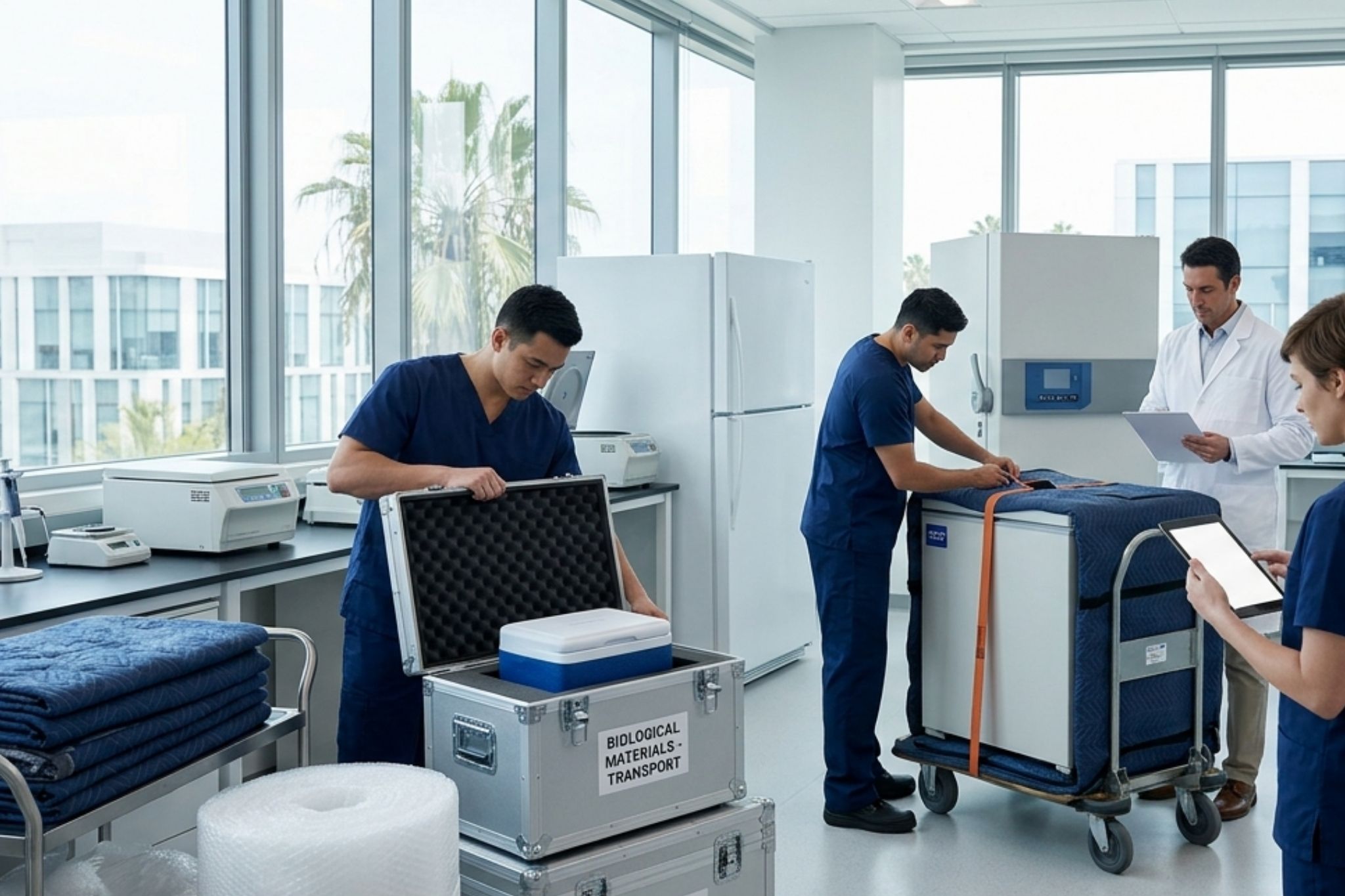
Temperature control. Many biological materials need to stay within a specific temperature range throughout transport, whether that’s refrigerated, frozen, or ultra-low temperature via dry ice or liquid nitrogen. Even a short gap in temperature control can compromise samples that took months to develop.
Time sensitivity. Unlike furniture, biological material often can’t sit in a truck for an extended period. Minimizing transit time, and having a clear plan for what happens if there’s a delay, matters more here than almost anywhere else in a lab move.
Chain of custody. For regulated or sensitive material, documenting who handled what, when, and how it was maintained throughout the move isn’t optional paperwork — it’s often a compliance requirement, and it protects you if a question comes up later.
Packaging and containment. Biological material typically requires specific containment standards, not standard packing materials, to prevent leaks, contamination, or exposure during transport.
Biosafety level considerations. Materials handled under specific biosafety protocols in the lab need to maintain equivalent handling standards during the move itself, not just at the bench.
How to Plan a Move That Includes Biological Material
Separate biological material from the general moving plan early. It shouldn’t be packed alongside standard lab equipment or treated as one more line item on a general inventory. Give it its own timeline and its own handling protocol.
Loop in your institution’s biosafety officer or compliance team before the move, not after. They can confirm what documentation, permits, or handling standards apply to your specific materials.
Confirm cold chain logistics in advance. Know exactly how samples will stay at the correct temperature from the moment they’re packed to the moment they’re placed in their new storage, including a contingency plan if transport takes longer than expected.
Use a moving partner who understands this isn’t standard freight. Ask directly how they handle temperature-sensitive materials and whether they’re familiar with chain-of-custody documentation, rather than assuming any commercial mover can manage it the same way they’d move office furniture.
Test storage at the destination before moving day. Confirm that freezers, refrigerators, or storage units at the new location are functioning and at the correct temperature before your samples arrive, not after.
What We Do Differently for Moves Involving Biological Material
We treat this category of move as its own project, not a subset of general lab relocation. That means coordinating closely with your lab’s compliance or biosafety team ahead of time, planning transport specifically around temperature and time sensitivity, and maintaining clear documentation throughout the process. Our role isn’t to replace your institution’s protocols — it’s to execute the physical move in a way that respects them.
A Note on What We Don’t Do
We’re a moving and logistics company, not a biosafety authority. We won’t tell you what containment level your material requires or what regulations apply to your specific research — that determination belongs to your institution’s compliance team. What we bring is careful execution of the plan they define: proper handling, temperature control, timing, and documentation on the moving side of the equation.
Frequently Asked Questions
Can biological samples be safely moved between facilities? Yes, with proper planning. Success depends on maintaining cold chain requirements, minimizing transit time, and following the containment and documentation standards set by your institution’s biosafety protocols.
Who determines the safety requirements for moving biological material? Your institution’s biosafety officer or compliance team should define the applicable requirements. A moving company’s role is to execute the physical relocation according to those standards, not to set them.
What happens if there’s a delay during transport of temperature-sensitive samples? This is why a contingency plan matters. Before the move, confirm how long samples can safely remain at the required temperature and what backup options exist, such as additional dry ice or a temporary storage stop, if transit takes longer than expected.
Does Rapid Office Movers handle the biosafety compliance side of a lab move? No, that responsibility sits with your institution’s compliance or biosafety team. We coordinate closely with them to execute the physical move according to their defined protocols.
How far in advance should we plan a move involving biological material? We recommend starting well before a standard lab move, often 8 or more weeks out, to allow time for compliance coordination, cold chain planning, and confirming storage readiness at the new location.
Planning a Move That Involves Biological Material?
If your lab relocation includes biological samples, cultures, or specimens, we’re glad to talk through how we’d approach the physical logistics alongside your institution’s compliance requirements. Reach out for a consultation and a quote built around what your move actually involves.